

Wastewater treatment plant for heavy metals using ferrites
Home → Our projects → Wastewater treatment plant for heavy metals using ferrites
- Objective: NBU Mint
- Electroplating production
- Wastewater treatment plant for heavy metals using ferrites
- Capacity: 30 m3/day
The initial data of the object
- Daily flow rate of industrial wastewater up to 30 m³/day
- Heavy metal ions in wastewater Cr3+, Cr6+, Zn 2+, Ni2+, Cu2+, Sn2+, Co2+, Cd2+, Fe3+
- Concentrations of heavy metal ions in wash water 20 - 130 mg/l
- Waste pickling solutions - Fe2+ concentration - up to 50 mg/l
- Requirements for the quality of wastewater treatment - MPC for discharge to the municipal sewerage system
- Limited space for the treatment plant
Technical solutions adopted
- The technology is based on the ferromagnetic method for the removal of heavy metal ions
- Preparation of ferromagnetic suspension from electroplating waste
- Removal of all heavy metal ions from wastewater in a single reactor. The residence time is 5 minutes.
- Using a compact module for sludge dewatering and conditioning
Implementation of the technology of ferromagnetic method of wastewater treatment from heavy metal ions Tysa Complex«
Modules:
- Preparation of ferrite slurry (FS) (optionally from waste solutions of electroplating production)
- Dosing of FR and control of heavy metal ion removal efficiency
- Separation of ferromagnetic particles
- Dehydration of ferrite sludge formed after wastewater treatment from heavy metal ions
- ASC TP
Results achieved
- Reliable technological process for the removal of heavy metal ions to meet the requirements for discharge MPC
- No concentration exceedances were noted during the long period of operation
- Pollution in treated wastewater exceeds the standard
- The plant control is fully automated
- Dosing of ferromagnetic suspension is proportional to the concentration of contaminants
- Treatment of concentrated wastewater and processing of concentrated pickling solutions
- Low operating costs
- Low amount of waste
Advantages of the ferromagnetic method
- High technological reliability;
- Removal of all metals including chromium (VI) in a single reactor;
- Reduced production space and plant size
- Minimal operating costs;
- Use of secondary raw materials - waste galvanic solutions;
- Water reuse, 40 - 60 %;
- The complex is operated in automatic mode;
- Guaranteed quality of wastewater treatment below the MPC standards for discharge
- Automatic quality control of treated wastewater
- Sludge moisture below 50%
- The volume of sludge is 50 to 60 times less compared to traditional methods
- Due to its crystalline structure, the dehydrated precipitate belongs to the 4th category.

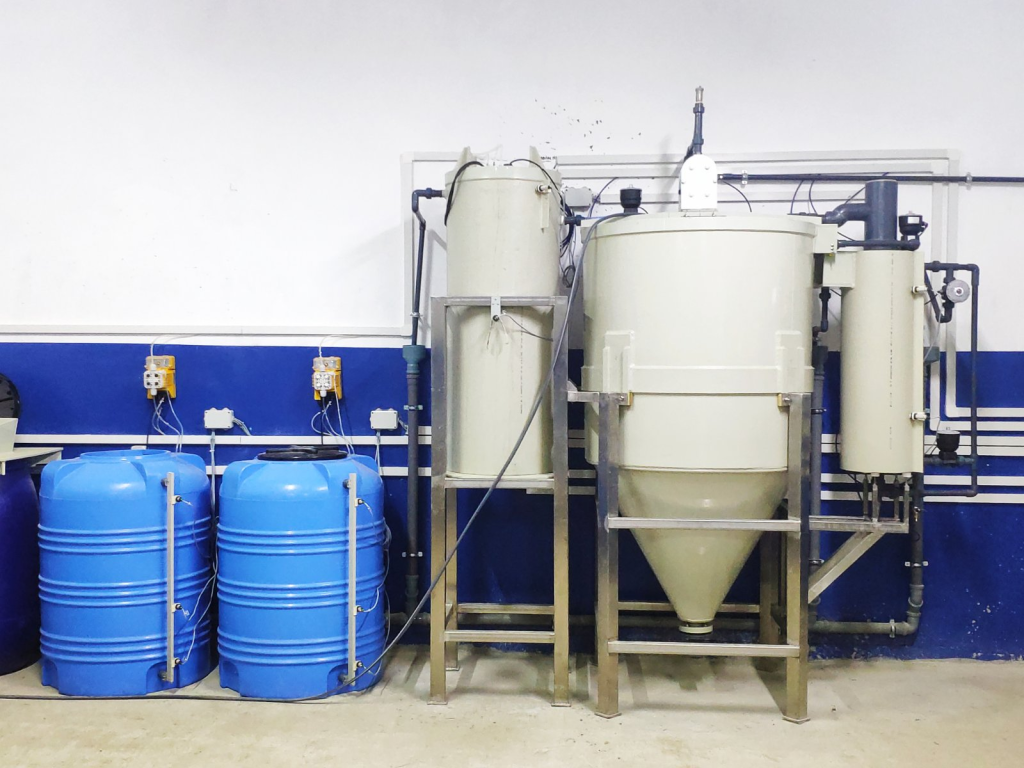
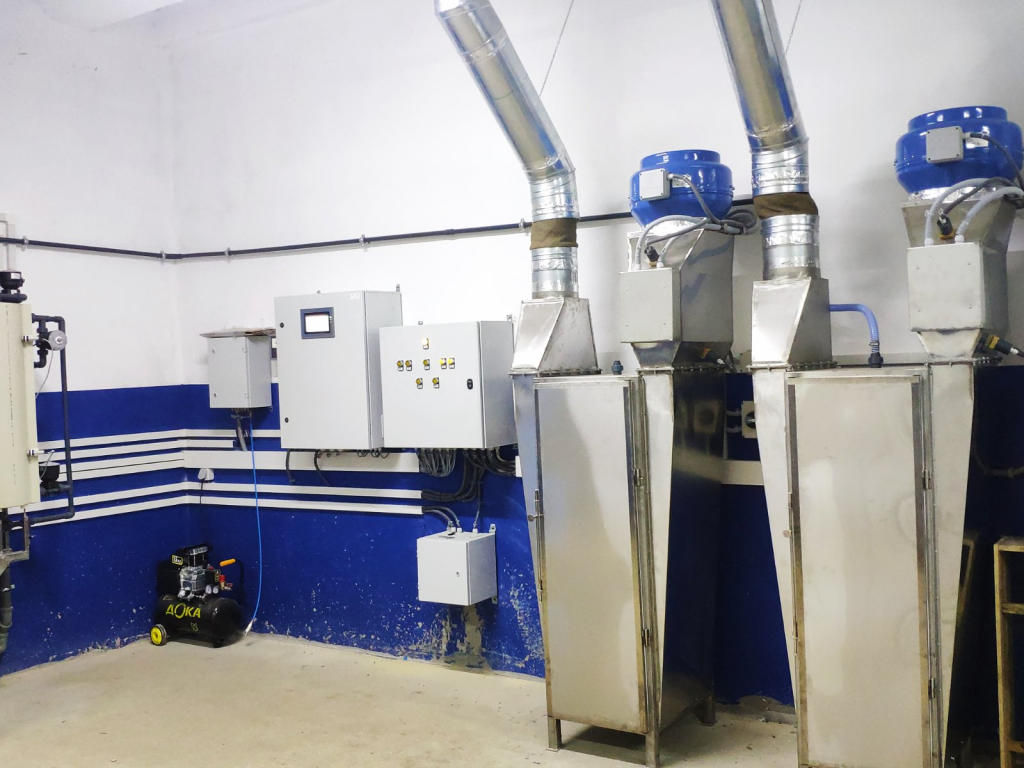

Tisa complex
Waste water treatment plant for heavy metal ions using ferrites
Realized projects
- Paper and cotton mill. Alytus, Lithuania
- NBU Banknote Mint, Kyiv, Ukraine
- Workshops of the Kyiv Metro, Kyiv
- SE NTP EkPO, Brovary
Send your task